Sustainable Business: Combining Profit and Purpose


In today’s economy, the idea of sustainable business is becoming more popular. It’s not just about making money anymore. It’s also about making a positive difference in society and the environment.
Entrepreneurship that focuses on sustainability is not just the right thing to do. It’s also a smart business move. Companies that care about the planet and people are more likely to succeed over time.
When businesses mix making money with doing good, they can do many great things. They can innovate, keep customers happy, and help make the world a better place.
Key Takeaways
- Sustainable business practices drive long-term success.
- Integrating social and environmental considerations is crucial.
- Businesses can drive innovation through sustainable practices.
- Customer loyalty is fostered through purpose-driven business.
- A sustainable future is achievable through collective effort.
The Rise of Purpose-Driven Business Models
The corporate world is changing. Companies are now focusing on more than just making money. They’re looking at what’s best for everyone involved.
From Shareholder Value to Stakeholder Capitalism
Stakeholder capitalism puts everyone’s needs first. This includes employees, customers, suppliers, and the community. It helps businesses grow and help society at the same time.
“The purpose of a corporation is to create value for all its stakeholders, not just shareholders.” – Klaus Schwab
The Triple Bottom Line: People, Planet, Profit
The triple bottom line (TBL) looks at more than just money. It also considers social and environmental impact. This way, companies can focus on being good for people and the planet.
| Bottom Line | Focus | Example Metrics |
|---|---|---|
| People | Social Impact | Employee satisfaction, community engagement |
| Planet | Environmental Impact | Carbon footprint, waste reduction |
| Profit | Financial Performance | Revenue growth, profitability |
Measuring Success Beyond Financial Returns
Companies can track their success in many ways. They might look at energy use, diversity, or how much they give back to the community.
By looking at more than just money, businesses can see their true impact. This helps them make choices that benefit everyone in the long run.
Understanding Sustainable Business: Core Principles and Practices
The idea of sustainable business has grown a lot. It now includes many practices that focus on making money and doing good. At its heart, sustainable business aims to make lasting value. It does this by using eco-friendly business practices and showing corporate social responsibility.
Defining Sustainability in a Business Context
Sustainability in business means managing resources well. It ensures today’s needs don’t harm tomorrow’s chances. It’s about cutting down environmental harm, promoting fairness, and staying financially strong.
Balancing Economic, Social, and Environmental Goals
A key part of sustainable business is the triple bottom line. It’s about balancing money, people, and planet. This can be done by:
- Using energy-saving tech to cut costs and harm to the environment.
- Supporting fair work and community projects for better social impact.
- Choosing sustainable sources to keep resources available for the future.
The Business Case for Long-term Thinking
Thinking long-term is key for sustainable business success. Focusing on long-term gains helps businesses face risks, grab opportunities, and grow strong. This mindset also encourages innovation. Companies look for new ways to lessen environmental harm and boost social good while keeping finances strong.
In summary, understanding and applying sustainable business principles is vital for companies to succeed today and tomorrow. By adopting eco-friendly business practices and corporate social responsibility, businesses can achieve long-term success and help create a better future.
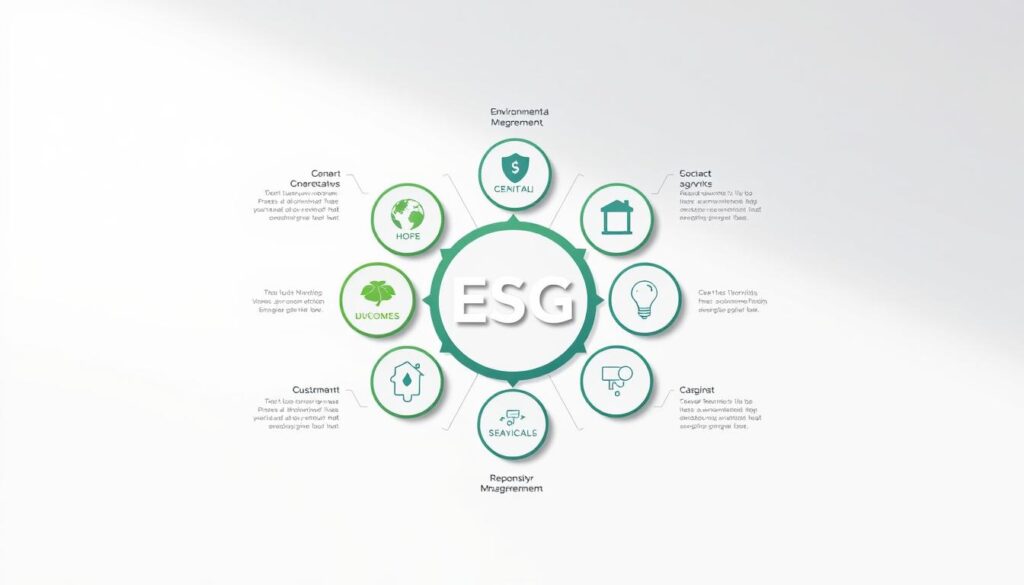
The ESG Framework: A Roadmap for Responsible Business
The ESG framework is key for businesses wanting to be more responsible. It helps them deal with environmental, social, and governance issues. This way, companies can tackle big challenges and still make money in the long run.
Environmental Factors: Resource Management and Climate Action
Environmental factors are a big part of the ESG framework. Companies need to cut down their environmental harm. They should manage resources well and take action on climate change.
Carbon Footprint Reduction Strategies
It’s important to lower carbon footprint to lessen environmental harm. Ways to do this include using renewable energy, saving energy, and offsetting carbon emissions.
Sustainable Supply Chain Management
A green supply chain is crucial for lessening environmental harm. This means checking suppliers, getting materials responsibly, and using eco-friendly packaging.
“Companies that adopt sustainable supply chain practices not only reduce their environmental footprint but also enhance their brand reputation and comply with increasingly stringent regulations.”
Social Considerations: Community Impact and Human Capital
Social aspects of the ESG framework look at how a company affects communities and its people. This includes fair labor, diversity, and helping communities.
| Social Consideration | Best Practice |
|---|---|
| Fair Labor Practices | Implementing policies that ensure fair wages and safe working conditions. |
| Diversity and Inclusion | Promoting a diverse workforce and inclusive culture. |
| Community Engagement | Engaging in initiatives that support local community development. |
Governance Practices: Ethics, Transparency, and Accountability
Good governance is key for ethical, open, and accountable business. This means fighting corruption, having diverse boards, and being transparent in reports.
By using the ESG framework, businesses can help achieve sustainable goals. They also become more resilient and successful over time.
Sustainable Entrepreneurship: Building Purpose-Driven Ventures
The world faces many challenges, and sustainable entrepreneurship is a key solution. It’s not just about making money. It’s about creating businesses that make a real difference.
Identifying Market Opportunities in Global Challenges
Sustainable entrepreneurs see opportunities in global challenges. They know that problems like climate change and social inequality can lead to innovation and leadership.
- Renewable energy solutions
- Sustainable agriculture practices
- Eco-friendly products and packaging
By focusing on these areas, entrepreneurs can make money and help society.
Innovative Business Models That Drive Positive Change
Innovative business models are key in sustainable entrepreneurship. They often use circular economy principles to reduce waste and use resources wisely. Other models include product-as-a-service and social enterprises that help communities.
“The future of entrepreneurship is not just about making money; it’s about making a difference.”
Securing Investment for Impact-Focused Startups
Getting funding is crucial for startups focused on impact. Impact investing is becoming more popular. Investors want to make money and help society or the environment.
The Rise of Impact Investing
Impact investing is growing. People realize that making money and doing good are not separate. This opens doors for sustainable entrepreneurs to get the funding they need to grow and make a bigger impact.
By using innovative models and focusing on sustainability, entrepreneurs can attract investors who want to help create a better future.
Brazil’s Sustainable Business Ecosystem
Brazil is a key player in the world economy and a hotspot for biodiversity. It has vast natural resources and a diverse economy. This makes it a testing ground for sustainable business models.
Unique Sustainability Challenges in the Brazilian Context
Brazil faces big sustainability challenges, especially in the Amazon rainforest. Deforestation and land degradation are major issues. They harm biodiversity and contribute to climate change.
Amazon Conservation and Business Responsibility
Businesses in Brazil play a big role in saving the Amazon. Many use sustainable sourcing practices and support reforestation. Big soy and cattle producers have pledged to stop deforestation, reducing their environmental harm.
Regulatory Framework and Incentives for Sustainable Practices
The Brazilian government supports sustainable business with laws and incentives. The New Forest Code helps protect forests while allowing for sustainable land use. Tax breaks for renewable energy and sustainable agriculture encourage a greener economy.
| Regulatory Measure | Description | Impact |
|---|---|---|
| New Forest Code | Legislation to preserve forests | Reduction in deforestation |
| Tax Incentives for Renewables | Tax breaks for renewable energy investments | Increase in renewable energy adoption |
| Sustainable Agriculture Programs | Support for sustainable farming practices | Improved soil health and biodiversity |
Brazilian Success Stories: Companies Leading the Way
Brazilian companies lead in sustainable business innovation. Natura, a cosmetics giant, uses natural ingredients and eco-friendly packaging. Renova makes toilet paper from 100% recycled materials, cutting down on virgin wood pulp use.
Local Innovations Addressing National Challenges
Local startups in Brazil are also making a big impact. They offer agtech solutions and fintech platforms for sustainable investing. These innovations help tackle Brazil’s unique sustainability challenges.
Implementing Sustainability Strategies in Your Business
In today’s world, making your business sustainable is crucial. It helps you stay ahead and make a real difference. A clear plan is key to success in sustainable business models.
Conducting a Comprehensive Sustainability Assessment
Start by checking how sustainable your current practices are. Look at your environmental, social, and governance impact. This helps you see where you can get better and innovate in ethical business.

Developing Actionable Goals and Meaningful Metrics
After assessing your sustainability, set clear goals. These should be specific, measurable, achievable, relevant, and timely (SMART). It’s also important to track your progress with meaningful metrics.
Engaging Stakeholders in Your Sustainability Journey
Getting everyone involved is key to success. This includes your team and the wider community.
Employee Engagement Programs
Programs for your team can build a sustainable culture. Educate and involve them in green initiatives to spark change.
Customer and Community Involvement
It’s also important to engage with customers and the community. Share your sustainability efforts openly. Work on products that help the planet.
Creating a Phased Implementation Plan
Plan your sustainability steps carefully. Start with what’s most impactful and doable. This ensures a smooth transition to greener practices.
By taking these steps, businesses can thrive while making the world a better place. It’s a win-win for profit and purpose.
Measuring Impact: From Metrics to Meaningful Change
Companies are now focusing more on ESG (Environmental, Social, and Governance) frameworks. Measuring their impact is a key part of their journey. It’s not just about showing what they’ve done, but also what they need to work on.
Key Performance Indicators for Sustainable Business
To measure impact well, businesses need to pick and track important KPIs. These KPIs should match the company’s sustainability goals. They help show how the company is doing in environmental, social, and governance areas.
- Environmental KPIs: Greenhouse gas emissions, water usage, waste management
- Social KPIs: Employee engagement, community development initiatives, customer satisfaction
- Governance KPIs: Board diversity, ethical sourcing, compliance with regulations
Sustainability Reporting Frameworks and Standards
There are many frameworks and standards for reporting sustainability. These help make sure reports are clear and can be compared.
GRI, SASB, and Integrated Reporting
The Global Reporting Initiative (GRI) offers a detailed way to report on sustainability. It looks at impacts in many areas. The Sustainability Accounting Standards Board (SASB) has standards for specific industries. They help companies share important sustainability info. Integrated Reporting mixes financial and sustainability reports, giving a full picture of a company’s performance.
| Framework/Standard | Focus | Key Features |
|---|---|---|
| GRI | Sustainability impacts | Comprehensive, flexible, and publicly available |
| SASB | Financially material sustainability issues | Industry-specific, decision-useful information |
| Integrated Reporting | Integrated thinking and reporting | Combines financial and sustainability reporting |
Communicating Your Impact Story Effectively
Telling your impact story well is key for engaging stakeholders. Use simple language and different ways to share your story. Highlight what you’ve done well and what you’re still working on.
Being open and honest is crucial for building trust. By using sustainability reports and other ways to communicate, you show you’re serious about making a difference.
Future Trends Shaping Sustainable Business
The world of sustainable business is changing fast. New tech and what customers want are leading the way. Several important trends are coming up that will change how we do business sustainably.
Circular Economy: Redesigning Products and Processes
The circular economy is becoming more popular. It aims to cut down waste and keep resources in use forever. By changing how we make and use things, companies can lessen their harm to the planet and find new ways to make money.
Technology as a Sustainability Enabler
Technology is key in making business more sustainable. It includes things like clean energy and going digital. These help companies lessen their impact on the environment and work better.
Blockchain for Supply Chain Transparency
Blockchain helps make supply chains clearer. It lets companies see where their goods come from. This can help avoid problems in the supply chain related to the environment and society.
AI and Big Data for Resource Optimization
AI and big data help use resources better. They predict when things need fixing and make operations more efficient. By looking at lots of data, companies can make smarter choices and waste less.
Evolving Consumer Expectations and Market Demands
What customers want is pushing for more sustainable products and services. Companies that don’t meet these needs might lose out to those that do.
As things keep changing, companies that focus on sustainability will do well. They’ll be ready for the fast-paced world we live in.
Conclusion: Embracing the Profit with Purpose Paradigm
Sustainable business practices are now key for companies everywhere. They help businesses succeed over time and make the world a better place. This approach is crucial for a fair and green future.
In places like Brazil, businesses are focusing on their purpose. They use environmental, social, and governance (ESG) factors in their work. This helps them avoid risks, find new chances, and encourage creativity.
The future of sustainable business looks bright. New tech, changing customer needs, and urgent climate issues will shape it. Companies that adopt green practices can grow their profits and help create a greener world.
Profit and purpose go hand in hand. They can boost growth, spark new ideas, and bring value to both businesses and communities.
FAQ
What is sustainable business and how does it differ from traditional business models?
Sustainable business aims to make money and do good. It looks at the environment, society, and how it’s run. This is different from old ways that only care about making money.
How can businesses measure their sustainability performance?
Companies can track their green efforts with special tools. They use things like key performance indicators (KPIs). Also, they follow reports from the Global Reporting Initiative (GRI) and the Sustainability Accounting Standards Board (SASB).
What role does stakeholder capitalism play in sustainable business?
Stakeholder capitalism is key in green business. It means looking out for everyone, not just shareholders. This includes workers, customers, and the planet too.
How can companies balance economic, social, and environmental goals?
Firms can mix money, people, and planet by using a triple bottom line. This means they look at more than just profits. They think about the future and being green.
What are some examples of innovative business models that drive positive change?
New business ideas focus on being green. Some use circular economy ideas, like offering products as services. Others work hard on making their supply chains better.
How can impact-focused startups secure investment?
Green startups can get funding by showing their good work. They need a solid plan and to talk to investors who care about the planet and people.
What is the role of ESG frameworks in sustainable business?
ESG guides businesses to act responsibly. It helps them find and fix problems, spot chances, and focus on being green.
How can businesses engage stakeholders in their sustainability journey?
Companies can get people involved by creating programs for employees. They can also work with customers and the community on green projects. And they should share their positive impact stories well.