How to Teach Kids About Money

Teaching kids about money management is key for their future. As a parent or guardian in Brazil, it’s vital to teach them good financial habits early.
Introducing financial education early helps kids have a good money relationship. This guide offers practical tips to make teaching children about money fun and effective.
Key Takeaways
- Start teaching money management early.
- Use real-life examples to illustrate financial concepts.
- Encourage children to save and budget.
- Lead by example with your own financial habits.
- Make learning about money a fun experience.
The Importance of Early Financial Education
Teaching kids about money early is key to their financial health. It helps them develop good money habits. This sets them up for financial success later in life.
Long-term Benefits of Money Literacy
Learning about money management helps kids make smart financial choices. It also helps them avoid debt. Warren Buffett once said, “Do what you would do if you were going to be there forever.” This advice is vital for planning financially for the long term.
Children who learn about money early tend to be more financially responsible as adults.
Current State of Financial Education in Brazil
In Brazil, schools are starting to teach kids about money. This is a big step towards preparing them for the financial world.
Brazilian School Curriculum and Financial Topics
Financial topics are now part of many school subjects. This makes learning about money a part of everyday education.
When to Begin Teaching Kids About Money
It’s time to start teaching kids about money sooner than you might think. Learning about money early can shape their financial skills as they grow.
Age-Appropriate Financial Concepts
Children can learn about money at different ages. Preschoolers can start with simple ideas like “money buys things.” Older kids can learn about saving and what’s a need versus a want.
- Preschoolers (3-5 years): Basic money concepts, like identifying coins and bills.
- Elementary school children (6-10 years): Understanding the value of money, basic saving.
- Pre-teens (11-13 years): More complex concepts like budgeting and spending decisions.
Recognizing Daily Teachable Moments
Every day offers chances to teach kids about money. For example, at the grocery store, talk about comparing prices and budgeting. Using real-life scenarios makes learning about money easier and more fun.
Brazilian Cultural Attitudes Toward Money Discussions
In Brazil, talking about money is seen as private. But, being open about financial decisions helps kids understand money’s value. It’s key to find a balance between cultural norms and teaching about money.
Start early and use daily life to teach kids about money. This way, parents can help their kids develop good money habits. Making “kids and money” talks a regular part of family life is beneficial.
Foundation Money Concepts for Ages 3-5
Teaching money basics to kids aged 3-5 can be both fun and educational. At this age, they start to understand the world. Financial literacy can be taught through playful learning.
Introducing Coins and Bills in Brazilian Currency
Begin by showing the Brazilian currency, using real coins and bills. Explain the different values of each. Real money makes learning more fun and real.
Interactive Games for Money Recognition
Play interactive games to help kids recognize money. These games can include matching coins or bills to their values.
Counting and Sorting Activities with Real Money
Activities like counting and sorting real money teach value. They also improve math skills. It’s a great way to teach financial literacy.
By starting early, you’re helping your child become financially savvy. It’s all about making learning fun and relevant. This is key for raising financially savvy kids and supporting their children’s financial education.
Building Financial Skills for Elementary School Children
Teaching kids about money early on can shape their future money habits. At this age, they can grasp more complex money ideas. These ideas will help them stay financially healthy later on.
Understanding the Value of Money Through Comparisons
Comparing prices is a great way to teach kids about money. For instance, you can go to a store and look at different products’ prices. This shows them that prices change and making smart choices is key.
Here’s an example comparison:
| Product | Brand A Price (R$) | Brand B Price (R$) |
|---|---|---|
| Cereal | 5.00 | 7.00 |
| Toys | 10.00 | 15.00 |
Basic Saving Concepts Using Visual Tools
Visual aids can help kids get saving. A clear jar or piggy bank lets them see their money grow. You can also use a savings chart to track their progress towards a goal.
“The way to get started is to quit talking and begin doing.” – Walt Disney
Guided Spending Decisions at Local Stores
Shopping with kids and helping them make choices is a hands-on way to teach them. Encourage them to pick based on what they can afford and what’s important to them.
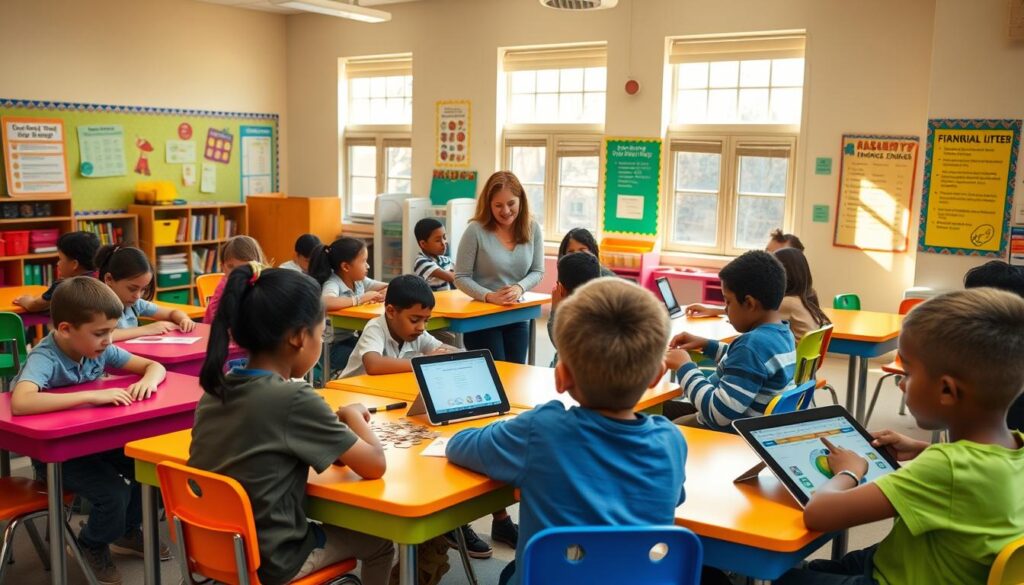
By teaching these financial skills to elementary school kids, you’re setting them up for success. They’ll learn habits that will help them for years to come.
Kids and Money: Effective Allowance Systems
An allowance system is more than just giving kids money. It’s about teaching them about financial responsibility. By setting up a good allowance system, parents can help their kids learn about money management.
Structuring Age-Appropriate Allowances
The amount and how often kids get money should match their age and understanding. Young kids might start with a weekly allowance to learn the basics. Older kids can handle more, like monthly allowances or budgets for specific things.
The Chores-for-Pay Debate
Parents often debate whether to link allowances to chores. Some think it teaches the value of work. Others believe it makes learning money harder. A good idea is to give a basic allowance and extra money for extra chores. This teaches both responsibility and the value of hard work.
Teaching Weekly and Monthly Budgeting
As kids get older, they should learn to budget their allowance. Start with weekly budgets to teach them to save, spend, and give. Later, introduce monthly budgets to help them plan for the future and understand saving.
Brazilian Family Approaches to Allowances
In Brazil, families use creative ways to teach about money. They use piggy banks or jars for different goals. It makes saving and spending fun and interactive for kids.
By using a good allowance system, parents can give their kids the skills to make smart money choices. This sets them up for a lifetime of financial well-being.
Smart Saving Strategies for Children of All Ages
Teaching kids to save money is key to their financial health. It helps them understand money’s value and make smart money choices.
Physical Savings Methods for Young Children
Young kids do well with hands-on savings tools. A piggy bank or a clear savings jar lets them watch their money grow. It makes saving fun and real.
Opening a First Bank Account in Brazil
As kids get older, getting a bank account is a big step. In Brazil, many banks offer special accounts for kids. These accounts have no minimum balance and teach about money.
Setting and Tracking Savings Goals
It’s important to help kids set and follow savings goals. They can use a chart or a savings app to track their progress.
Brazilian Banking Options for Minors
| Bank | Account Features | Minimum Age |
|---|---|---|
| Itaú | No minimum balance, educational materials | 12 |
| Bradesco | Online banking, mobile app | 14 |
| Santander | Debit card for teens, savings account | 12 |
Parents can pick the best bank for their child. This teaches them about money management and financial literacy.
Teaching the Critical Difference Between Needs and Wants
Teaching kids the difference between needs and wants is key. It helps them make smart money choices and develop good spending habits early on.
Practical Exercises for Real-World Scenarios
Practical exercises can really help kids grasp the needs vs. wants concept. For instance, they can practice deciding between essential and discretionary spending. Role-playing shopping scenarios makes learning fun and sticks in their memory.
Using Shopping Trips as Educational Opportunities
Shopping trips are great for teaching kids about money. By letting them help with buying decisions, parents can show them how to choose wisely. Talking about the value of items helps them understand what’s truly important.
Creating Visual Aids for Decision Making
Charts or diagrams can help kids see the difference between needs and wants. Making a “needs and wants list” together is a simple yet effective way to teach this.
Family Finance: Including Children in Household Money Matters
Getting kids involved in family money talks boosts their financial smarts. Parents can share valuable lessons on managing money by talking about it together.
Age-Appropriate Family Budget Discussions
Talking about family budgets with kids should match their age. Young ones can learn about needs vs. wants. Older kids can dive into more detailed budget talks.
Collaborative Family Financial Goal Setting
Setting financial goals together is exciting. It teaches kids the value of saving for big things like school or family trips.
“The way to get started is to quit talking and begin doing.” – Walt Disney
Teaching Kids About Household Bills and Expenses
Explaining bills and expenses to kids helps them understand life’s costs. This includes talking about bills for utilities, food, and more.
Brazilian Cost of Living Conversations
Talking about living costs in Brazil is helpful. For example, discussing how inflation changes what we spend can be eye-opening.
| Expense Category | Monthly Cost (R$) |
|---|---|
| Groceries | 800 |
| Utilities | 200 |
| Transportation | 300 |
Inviting kids into family finance talks teaches them about money and builds teamwork and responsibility.

Navigating Digital Money and Online Financial Education
In today’s world, knowing how to manage money online is crucial for kids. With more digital transactions, it’s key to teach them how to use online financial tools safely.
Teaching Safe Online Spending Habits
Parents should teach kids to check website security before buying things online. It’s important to use secure payment methods and keep personal info safe. Using real-life examples can help show the dangers of online shopping.
Brazilian Apps and Tools for Kids’ Financial Learning
Brazil has many apps and tools for teaching kids about money. For example, GuiaBolso and others make learning fun with games and challenges. These tools help kids understand money management in an engaging way.
Understanding Digital Payments and Currencies
It’s important for kids to learn about digital payment systems like Pix. Knowing how these systems work helps kids understand the digital financial world better.
Brazilian Digital Payment Systems
| Payment System | Description | Key Features |
|---|---|---|
| Pix | Instant payment system | Fast, secure, and available 24/7 |
| PayPal | Online payment platform | Global reach, buyer protection |
| PagSeguro | Digital payment solution | Easy integration, secure transactions |
By learning about these systems, kids can better understand digital finance.
Teaching kids about digital money and online finance is important. It helps them grow up to be financially smart. With the right tools and safe habits, parents can guide their kids through the world of modern finance.
Fostering Entrepreneurship and Earning Skills
Teaching kids about entrepreneurship helps them learn about money. They learn to earn, spend wisely, and value hard work.
Kid-Friendly Business Ideas in Brazilian Communities
Kids can start businesses like pet sitting, making crafts, or tutoring. These jobs teach them important skills and help them earn money.
Teaching the Value of Work and Initiative
It’s key to teach kids the value of hard work and initiative. This way, they understand that making money takes effort and commitment.
Managing Earnings, Expenses, and Profits
Children should learn to handle their money. They need to know the difference between spending and making a profit. This helps them make smart financial choices.
Young Entrepreneur Success Stories from Brazil
In Brazil, many young people have turned their passions into businesses. For example, a teenager might start an online store for local crafts.
| Business Idea | Age Group | Skills Learned |
|---|---|---|
| Pet Sitting | 10-12 years | Responsibility, Time Management |
| Lemonade Stand | 6-9 years | Basic Math, Customer Service |
| Handmade Crafts | 8-12 years | Creativity, Financial Literacy |
Preparing Teenagers for Financial Independence
As teenagers get closer to adulthood, it’s key to teach them about money management. They need to know about credit, debt, and how banks work in Brazil.
Introduction to Credit, Debt, and Brazilian Banking
Teenagers should learn about credit and debt. They need to understand credit cards and the dangers of too much debt. Brazilian banking systems offer many services that can be explained to them.
Knowing the Brazilian banking system is vital for managing money well. They should learn about different bank accounts and how to use them smartly.
Education Savings and University Costs in Brazil
Saving for college is a big part of financial planning. Teenagers should know how much college costs in Brazil and why saving is important.
- Understanding the cost of higher education
- Exploring savings options for education
- Learning about scholarships and financial aid
First Jobs, Taxes, and Financial Responsibilities
Getting their first job is a big deal for teenagers. They need to know the money responsibilities that come with it, like taxes and managing their pay.
Brazilian Labor Laws for Young Workers
Teenagers should also know their rights and duties under Brazilian labor laws. This includes knowing about minimum wage, work permits, and other legal rules for young workers.
Conclusion: Raising Financially Responsible Children in Today’s Economy
Teaching kids about money is key for their future. It helps them learn important money skills. These skills will help them as adults.
Teaching kids about money is more than just giving them what they need. It’s about teaching them to manage their own money. By using the tips from this guide, you can help your kids become financially smart.
Keep guiding your kids on their money journey. Be patient, consistent, and positive. Encourage them to ask questions and learn from their mistakes.
Together, you can help your kids develop a good relationship with money. This will prepare them for financial success in the future. It’s a great way to raise kids who are ready for today’s economy.
FAQ
At what age should I start teaching my kids about money?
You can start teaching your kids about money when they are 3-5 years old. Introduce them to coins and bills first. Then, as they get older, add more lessons.
How can I make learning about money fun for my kids?
To make learning about money fun, use interactive games and counting activities. Real money and visual aids can also help them understand financial concepts better.
What is the best way to structure an allowance for my kids?
Make the allowance age-appropriate and tie it to chores or tasks. Teach them to budget and make smart financial decisions with their allowance.
How can I teach my kids to distinguish between needs and wants?
Teach them by using real-world examples and visual aids. Take them on shopping trips to practice making financial decisions.
What are some kid-friendly business ideas that can help my kids earn money?
Consider starting a pet-sitting or dog-walking business. They can also offer lawn care or gardening services. Making handmade products to sell online or at local markets is another option.
How can I involve my kids in family financial discussions?
Involve them in discussions about budgeting and setting financial goals. Explain household expenses and bills in a way they can understand.
What are some Brazilian banking options available for minors?
In Brazil, some banks offer special accounts for minors. These include savings accounts and debit cards. They help kids learn about managing money and making transactions.
How can I teach my kids about digital payments and online financial transactions?
Teach them about online banking and digital wallets. Explain how they work and teach them safe online spending habits.
What are some effective ways to encourage my kids to save money?
Use physical savings methods like piggy banks. Open a savings account and set and track savings goals. These methods can encourage kids to save.
How can I prepare my teenagers for financial independence?
Teach them about credit, debt, and banking. Educate them on saving for education and university costs. Also, teach them about their first jobs and taxes.