Secured vs. Unsecured Loans: What’s the Difference?

Understanding the difference between secured and unsecured loans is key. These credit types have unique features that affect your financial choices.
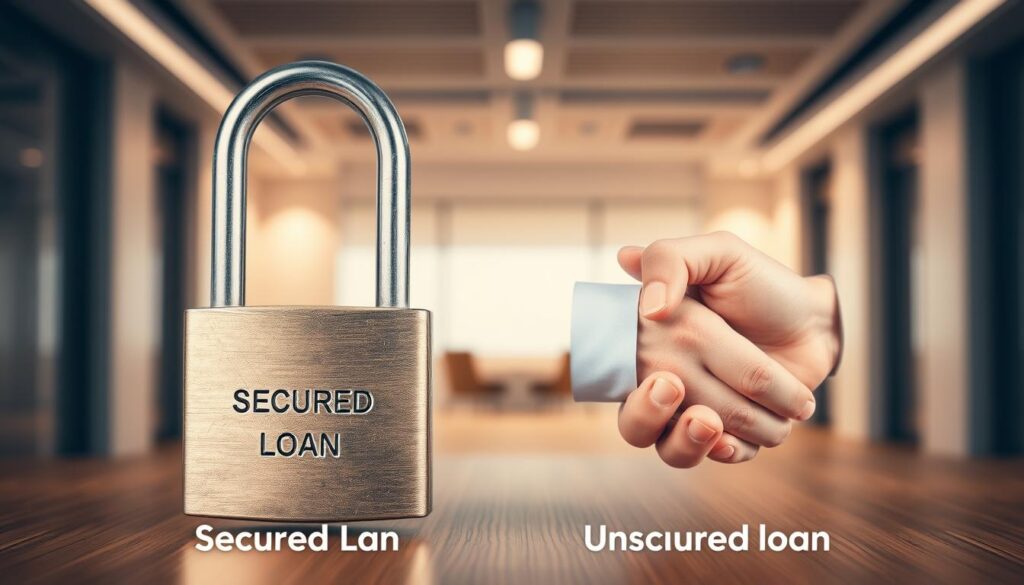
The main difference is the risk level for both the lender and the borrower. A secured loan needs collateral, which the lender can take if you can’t pay back. An unsecured loan doesn’t need collateral, making it riskier for the lender.
Key Takeaways
- Secured loans require collateral, while unsecured loans do not.
- The type of loan you choose affects your financial risk.
- Understanding the differences is key to making informed decisions.
- Secured loans are generally less risky for lenders.
- Unsecured loans often have higher interest rates.
Understanding the Basics of Loans
Knowing about loans is key to smart money choices today. Loans help people and businesses reach their goals.
What Is a Loan?
A loan is when someone borrows money from a lender. They agree to pay it back, often with extra money called interest. The details of when and how to pay back are set by both sides.
How Loans Function in the Financial System
Loans are important for getting money for needs or projects. There are many kinds, like personal loans, mortgages, and business loans. Each has its own rules.
Knowing about credit scores is also vital. They affect if you can get a loan and how much interest you’ll pay.
Understanding loans helps people make better choices. It lets them pick the right loan for their situation.
What Are Secured Loans?
Understanding secured loans is key to smart financial choices. These loans ask borrowers to use assets as collateral. This makes lenders feel safer.
Definition and Core Characteristics
Secured loans use collateral that lenders can take if payments stop. They often have lower interest rates and let you borrow more than unsecured loans.
- Lower interest rates due to reduced lender risk
- Higher borrowing limits based on collateral value
- Potential for longer repayment terms
Common Types of Collateral
Common collateral for secured loans includes:
- Real estate properties
- Vehicles
- Other valuable assets like jewelry or equipment
The value and type of collateral affect the loan terms.
How Secured Loans Work in Brazil
In Brazil, secured loans are a hit with both people and businesses. Lenders check the collateral’s worth and the borrower’s credit to set terms. The best secured loan options usually come from well-known banks and financial groups.
What Are Unsecured Loans?
Unsecured loans are a financing option that doesn’t need collateral. This makes them a favorite among many borrowers. They differ from secured loans, which require you to use an asset as security.
Definition and Key Features
These loans are given based on your credit score, income, and past credit history. They stand out because you don’t need to put up collateral. You can use the money however you want, and they often get approved faster than secured loans.
Creditworthiness Assessment
Lenders check how reliable you are by looking at your credit score, income, and debt. A high credit score means you’re more likely to get the loan. It shows you’re good at paying back what you owe.
Unsecured Loan Options in Brazil
In Brazil, you can find many unsecured loan options. These include personal loans and credit cards. They help with various needs, like funding personal projects, unexpected bills, or paying off other debts.
| Loan Type | Interest Rate | Repayment Term |
|---|---|---|
| Personal Loan | 12% – 20% per annum | 12 – 60 months |
| Credit Card | 15% – 25% per annum | Revolving credit |
Secured vs. Unsecured Loans: Key Differences
Secured and unsecured loans are different in many ways. They affect both lenders and borrowers in big ways. Knowing these differences helps you make better loan choices.
Risk Assessment from Lender’s Perspective
Lenders see risk differently for secured and unsecured loans. Secured loans are safer because they have collateral. If you can’t pay, the lender can take the collateral. On the other hand, unsecured loans are riskier because they don’t have collateral. They depend more on your credit.
Interest Rates and Terms Comparison
Secured and unsecured loans have different interest rates and terms. Secured loans usually have lower interest rates and better terms because of the collateral. Unsecured loans, however, have higher interest rates and stricter terms because they’re riskier for lenders.
Approval Process Differences
The approval process for secured and unsecured loans is different. Secured loans need a longer evaluation, including checking the collateral. This makes the process longer. Unsecured loans are faster but depend more on your credit score and history.
In conclusion, secured and unsecured loans differ in risk, interest rates, terms, and approval. Knowing these differences is key for borrowers. It helps them make choices that fit their financial needs and goals.
The Impact of Credit Scores on Secured Loan, Unsecured Loan, Credit Types
Knowing about credit scores is key when dealing with loans in Brazil. These scores show how reliable you are with money. They help lenders decide if they should lend to you and what terms to offer.
How Credit Scores Affect Loan Eligibility
Credit scores really matter when you want a loan. A good score means you’re more likely to get a loan with better terms. But, a bad score might lead to higher interest rates or even a loan denial.
Credit Score Requirements for Different Loan Types
Loans have different needs when it comes to credit scores. For example, secured loans might be easier to get because you’re using something valuable as collateral. On the other hand, unsecured loans often need higher scores because there’s no collateral to back them up.
Building Credit in the Brazilian Financial System
To build a strong credit profile in Brazil, you need to pay bills on time and keep your credit use low. Also, check your credit reports for mistakes. Doing these things can help raise your credit score, making you eligible for more loans.
In summary, credit scores are very important in Brazil for getting loans. By managing your credit well, you can find better loan deals and improve your financial situation.
Advantages of Secured Loans
In Brazil, many people choose secured loans for good reasons. They get better interest rates and more flexible payment plans. This is because these loans use collateral, which lowers the lender’s risk.
Lower Interest Rates
Secured loans have lower interest rates than unsecured ones. This is because the collateral reduces the lender’s risk. So, borrowers can save a lot of money over time.
Higher Borrowing Limits
Secured loans let you borrow more money than unsecured loans. The collateral makes lenders feel safer, so they can lend more. This is great for big purchases or projects.
Longer Repayment Terms
Secured loans also come with longer repayment times. This means lower monthly payments, which is easier on your budget. It’s especially useful for big loans.
Disadvantages of Secured Loans
Secured loans have many benefits, but they also have big drawbacks. It’s important to know these downsides before choosing a loan.
Risk of Asset Loss
One big risk is losing the asset used as collateral. If you can’t pay back the loan, the lender might take your asset. This could mean losing a home or car, which affects your finances and life.
Key risks include:
- Loss of primary residence or other essential assets
- Disruption of personal and professional life due to asset repossession
- Potential negative impact on credit scores due to default
In Brazil, where secured loans are common, borrowers must be careful about their loan terms to avoid losing assets.
Longer Approval Process
Secured loans also take longer to get approved than unsecured loans. Lenders have to check the asset’s value and your credit, which takes time. The process includes steps like appraising the asset, checking your credit, and preparing legal documents.
The approval process may involve:
- Initial application and documentation
- Collateral appraisal and valuation
- Creditworthiness assessment
- Final approval and disbursement
In summary, secured loans offer big funds but have downsides like asset loss risk and a longer approval time. Borrowers should think about these points when picking a loan.
Advantages of Unsecured Loans
Unsecured loans have many benefits that make them popular in Brazil. They don’t need collateral, which means more people can get them.
No Collateral Required
These loans don’t use any asset as security. This means you won’t lose your property if you can’t pay back. It’s great for those without big assets or who don’t want to risk theirs.
Not needing collateral makes getting a loan easier. It also lowers the risk of losing something valuable.
Faster Approval Process
Getting an unsecured loan is quicker than a secured one. Lenders check your credit and financial history. This makes the process faster.
Faster access to funds is key for urgent needs or business chances. It’s a big plus.

Flexibility in Loan Usage
Unsecured loans can be used in many ways. You can pay off debt, fund a business, or cover unexpected costs. This makes them a flexible financial option.
- Debt consolidation
- Business financing
- Covering medical expenses
- Funding home improvements
Unsecured loans are a good choice for many. Knowing their benefits helps you make better financial decisions.
Disadvantages of Unsecured Loans
Unsecured loans have many benefits, but they also have big downsides. One major issue is that lenders take on more risk. This means borrowers get less favorable terms.
Higher Interest Rates
Unsecured loans usually have higher interest rates than secured loans. This is because lenders don’t have collateral to fall back on. So, borrowers pay more over time. For example, interest rates can be between 10% to 20% or more, based on credit and lender terms.
Lower Borrowing Limits
Another problem with unsecured loans is the lower borrowing limits. Lenders are careful with big loans without collateral. This means borrowers can’t get as much money as they need. It’s tough for those needing a lot of money for big expenses or investments.
Popular Secured and Unsecured Loan Types in Brazil
The Brazilian financial market has many loan options. These include both secured and unsecured loans. They meet different financial needs and profiles.
Common Secured Loan Options
Secured loans in Brazil are backed by collateral. This reduces the risk for lenders. It also gives borrowers more favorable terms.
Home Loans
Home loans are a top choice for secured loans. They let people buy or refinance a home. The interest rates are competitive.
Auto Loans
Auto loans help finance a vehicle purchase. The vehicle acts as collateral for the loan.
Secured Personal Loans
Secured personal loans offer flexibility. Borrowers can use the funds for various needs. The loan is secured by assets like savings or investments.
Common Unsecured Loan Options
Unsecured loans in Brazil don’t need collateral. This makes them easier to get for those without assets.
Personal Loans
Personal loans are versatile and unsecured. They can be used for many things. This includes debt consolidation and financing a vacation.
Credit Cards
Credit cards are a form of revolving unsecured credit. They let users make purchases and pay bills up to a limit.
Student Loans
Student loans help finance education. Repayment terms are often delayed until after graduation.
| Loan Type | Secured/Unsecured | Typical Use |
|---|---|---|
| Home Loan | Secured | Purchase or refinance a home |
| Auto Loan | Secured | Purchase a vehicle |
| Personal Loan | Unsecured | Debt consolidation, personal expenses |
| Credit Card | Unsecured | Revolving credit for purchases and bills |
| Student Loan | Unsecured | Financing education expenses |
How to Choose Between Secured and Unsecured Loans
To pick the right loan, look at your money situation, what you need to borrow, and how much risk you can take. This will guide you to a choice that fits your financial goals.
Assessing Your Financial Situation
First, check your income, spending, and debts. Knowing your financial health is key to picking the right loan. Your credit score matters a lot for loan approval and rates.
Considering Your Borrowing Needs
Then, think about why you need the loan and how much you want to borrow. Secured loans are for big needs like homes or cars, needing collateral. On the other hand, unsecured loans are for smaller needs or personal spending.
Evaluating Risk Tolerance
Last, think about how much risk you can handle. Secured loans use collateral, which can be lost if you can’t pay. Unsecured loans don’t need collateral but have higher rates. Decide based on what feels right for you.
Conclusion
Choosing between a secured loan and an unsecured loan depends on several factors. These include your financial situation, borrowing needs, and how much risk you’re willing to take. It’s important to understand the differences between these credit types to make a good choice.
Secured loans have lower interest rates and you can borrow more money. But, you need to put up collateral, which could be lost if you can’t pay back the loan. Unsecured loans don’t need collateral, but they have higher interest rates and lower borrowing limits.
When picking a loan, think about your financial situation and what you need to borrow. If you have a good credit score and a steady income, you might get a better rate on an unsecured loan. But, if you need to borrow a lot, a secured loan might be better.
In the end, knowing the terms and conditions of both secured and unsecured loans is key. This helps you choose a loan that fits your financial goals. By carefully considering your options, you can avoid financial problems.
FAQ
What is the main difference between a secured and an unsecured loan?
Secured loans need collateral, which the lender can take if you can’t pay. Unsecured loans don’t need collateral but might have higher interest rates or stricter rules.
How do credit scores affect loan eligibility for secured and unsecured loans?
Credit scores are very important for both types of loans. A good score can help you get approved and might give you better terms, especially for unsecured loans.
What are the advantages of choosing a secured loan over an unsecured loan?
Secured loans often have lower interest rates and higher borrowing limits. They also have longer repayment terms. These benefits make them good for big purchases or long-term needs.
Can I get an unsecured loan with a bad credit score?
Getting an unsecured loan with bad credit is harder but not impossible. Some lenders offer loans to people with poor credit, but these might have higher rates or fees.
What types of collateral are commonly used for secured loans?
Common collateral includes real estate, vehicles, and other valuable items. The type needed depends on the lender and the loan.
Are there any specific credit score requirements for different loan types?
Yes, different loans have different credit score needs. Secured loans might be more flexible because of the collateral. Unsecured loans often need higher scores to reduce the lender’s risk.
How can I build credit in the Brazilian financial system?
To build credit, pay bills on time, keep credit use low, and avoid bad marks on your report. Knowing how credit works in Brazil and being responsible with credit is key.
What are the best secured loan options available in Brazil?
In Brazil, top secured loans include home, auto, and personal loans. These are offered by many banks and the best one depends on your needs and finances.
What are the benefits of unsecured loans?
Unsecured loans have many benefits. They don’t need collateral, are approved quickly, and are flexible. These make them good for many financial needs.