How to Build an Emergency Fund Step by Step

Building an emergency fund is key to securing your financial future. It acts as a safety net for unexpected expenses and financial downturns. Having savings can reduce stress and give you peace of mind, helping you focus on your long-term goals.
To begin, you need to check your financial health, set savings goals, and make a plan to reach them. This means knowing your income, expenses, and financial obligations. By taking a step-by-step approach, you can create a strong saving money plan that meets your needs.
Key Takeaways
- Assess your financial situation to determine your savings goals.
- Create a plan to achieve your emergency fund goals.
- Understand your income, expenses, and financial obligations.
- Build a robust saving strategy.
- Review and adjust your plan regularly.
What Is an Emergency Fund and Why You Need One
An emergency fund is more than just a savings account. It’s a financial safety net that helps you deal with unexpected costs and financial downturns. Having one is key to keeping your finances stable and avoiding debt when times get tough.
Definition of an Emergency Fund
An emergency fund is a special savings for unexpected bills, like car repairs or medical costs. It helps you avoid using your long-term savings or getting into debt when you face unexpected expenses.
True Emergencies vs. Unexpected Expenses
It’s important to know the difference between true emergencies and unexpected expenses. True emergencies need immediate money, like medical emergencies or job loss. Unexpected expenses are unplanned costs, like fixing a broken appliance. Knowing this helps you use your emergency fund correctly.
Benefits of Having Financial Security
Having an emergency fund brings many benefits, like less financial stress and more financial security. It lets you take risks in your career or investments, knowing you’re safe. It also stops you from making hasty financial choices when you’re stressed.
| Benefits | Description |
|---|---|
| Reduced Financial Stress | Having a financial cushion reduces worry about the future. |
| Increased Financial Security | An emergency fund protects you from financial shocks. |
| Better Decision Making | With a safety net, you can make smarter financial choices. |
Understanding what an emergency fund is and why it’s important is the first step to securing your financial future. It’s about saving regularly and being ready for life’s surprises.
Assessing Your Financial Situation
Your journey to financial security starts with knowing your current financial state. You need to count your savings, understand your monthly costs, and find areas where you’re at risk financially.
Evaluating Your Current Savings
First, figure out how much you have saved. Look at all your liquid assets, like high-yield savings accounts and money you can get to easily. This will show you how much you have to fall back on.
Understanding Your Monthly Expenses
Next, track where your money goes each month. Sort your expenses into needs (like housing, food, and utilities) and wants (like dining out and entertainment). This helps you see where you can save money.
Identifying Financial Vulnerabilities
Then, think about what could make your finances shaky. Consider your job security, health, and other things that might change your income or spending. Knowing this helps you figure out how much to save for emergencies.
Determining How Much to Save in Your Emergency Fund
The amount you should save in your emergency fund depends on several factors. These include your monthly expenses and job stability. Saving the right amount can give you financial security and peace of mind.
The 3-6 Month Rule for Expenses
A common guideline is to save enough to cover 3 to 6 months of living expenses. This range helps you cover essential costs in case of job loss, medical emergencies, or other unexpected events.
- Essential expenses include rent/mortgage, utilities, food, transportation, and minimum payments on debts.
- Saving 3 months’ worth of expenses is a good starting point for those with stable jobs and minimal debt.
- Aim for 6 months or more if you have dependents, are self-employed, or have variable income.
Adjusting Based on Job Stability
Your job stability is key in determining how much you should save. If you’re in a stable job with a steady income, you might need less in your emergency fund. This is compared to someone who is self-employed or in a volatile industry.
Consider the following:
- If you’re in a secure job, saving 3 months’ worth of expenses might be sufficient.
- If you’re self-employed or in a less stable field, aim to save 6 months’ worth or more.
Brazilian Economic Factors to Consider
Brazil’s economic conditions can impact your financial stability. Factors such as inflation rates, economic growth, and employment trends should be considered when determining your emergency fund size.
For instance:
- During times of economic uncertainty, having a larger emergency fund can provide a buffer against financial shocks.
- Keep an eye on economic indicators and adjust your savings goals accordingly.
Setting Clear Emergency Fund Goals
Setting clear emergency fund goals is the first step towards financial preparedness. By defining what you want to achieve, you can create a roadmap to financial stability.
Creating Short-term Milestones
Breaking down your long-term goal into smaller, manageable milestones is crucial. For instance, if your goal is to save $3,000, start by saving $500. This makes the task less daunting and allows you to track your progress. Short-term milestones help maintain motivation and provide a sense of accomplishment.
Establishing a Realistic Timeline
A realistic timeline is essential for achieving your emergency fund goals. Assess your income and expenses to determine how much you can save each month. Be honest about your financial capabilities to avoid setting yourself up for failure. A timeline that is too aggressive can lead to frustration, while a more realistic one fosters a sustainable savings habit.
Using SMART Goal Framework
The SMART goal framework is a useful tool for setting effective emergency fund goals. SMART stands for Specific, Measurable, Achievable, Relevant, and Time-bound. For example, “I will save $1,000 in 6 months by setting aside $167 each month” is a SMART goal. This approach ensures your goals are clear and attainable.
| SMART Criteria | Emergency Fund Goal Example |
|---|---|
| Specific | Save $1,000 |
| Measurable | Track monthly savings of $167 |
| Achievable | Based on current income and expenses |
| Relevant | Builds emergency fund for financial security |
| Time-bound | Within the next 6 months |
Finding Money to Build Your Emergency Fund
Finding money for an emergency fund is key to financial security. It means making smart money choices. These choices balance what you need now with what you’ll need later.
Reducing Unnecessary Expenses
One good way to save for your emergency fund is to cut unnecessary spending. Start by tracking your monthly spending to find where you can save. Use budgeting apps to keep an eye on your spending.
Making small changes can help a lot. Try cooking at home instead of eating out or canceling unused subscriptions. Saving on daily costs lets you put more money into your emergency fund.
Increasing Your Income Sources
Another way to grow your emergency fund is to earn more money. Look into freelancing, part-time jobs, or selling things you don’t need anymore. This extra cash can go straight into your savings.
Investing in your skills or education can also boost your income. This can lead to better jobs and higher pay, helping you save more.
Automating Your Savings
Automating your savings helps you save regularly without effort. Set up automatic transfers from your checking to your savings or emergency fund. This way, you save money without having to think about it.
By using these strategies—cutting unnecessary spending, earning more, and automating savings—you can build a strong emergency fund.
Where to Keep Your Emergency Fund
Choosing the right place for your emergency fund is crucial. It should be easy to get to, but not so easy that you spend it on things you don’t need. In Brazil, there are many places to keep your emergency money.
High-Yield Savings Accounts in Brazil
High-yield savings accounts are great for emergency funds because they pay more interest than regular savings accounts. In Brazil, Nubank and Inter have good rates. These accounts let you get your money quickly when you need it.
Money Market Accounts and CDBs
Money market accounts and CDBs (Certificates of Deposit) are also good choices. CDBs are special deposits with fixed interest rates, often higher than regular savings. They require you to keep your money in the CD for a set time to avoid penalties. Choosing a CDB with a feature for quick access or a short term is key to balancing ease and growth.
Balancing Accessibility and Growth
Finding the right balance between easy access and growth is key for your emergency fund. You need your money to be ready for emergencies but also to grow. Think about using a high-yield savings account for quick needs and a CDB or money market account for longer-term savings.
| Account Type | Liquidity | Interest Rate |
|---|---|---|
| High-Yield Savings | High | Medium |
| Money Market Accounts | High | Medium to High |
| CDBs | Low to Medium | Medium to High |
Step-by-Step Process to Build Your Emergency Fund
Building an emergency fund is key to financial stability. It acts as a safety net, helping you handle unexpected costs without debt.
Step 1: Start with a Small Goal
Start with a goal you can reach. Aim for $1,000 or one month’s expenses, depending on what’s easier for you.
Tip: Break your goal into smaller steps. This makes it feel less overwhelming.
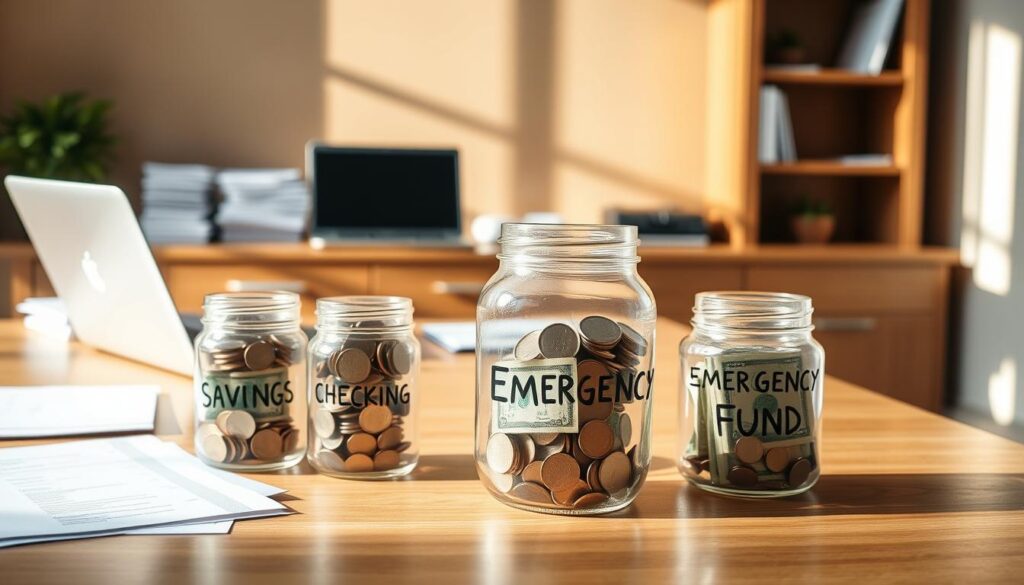
Step 2: Create a Dedicated Account
Open a special savings account for your emergency fund. This keeps your savings separate from your daily spending.
Consider: Choose high-yield or money market accounts. They offer interest while still being easy to access.
Step 3: Set Up Automatic Transfers
Automate your savings by setting up regular transfers. This keeps you on track with your goal.
Benefit: Automatic transfers make saving easier and less likely to be forgotten.
Step 4: Gradually Increase Your Contributions
As your finances improve, save more for your emergency fund. This could be due to a raise, lower expenses, or other financial gains.
Strategy: Regularly review your budget to find ways to save more for your emergency fund.
By following these steps, you can build a strong emergency fund. It gives you financial security and peace of mind. The most important thing is to start now and stay consistent.
Maintaining and Replenishing Your Emergency Fund
Building an emergency fund is not a one-time task. It’s an ongoing process of keeping it filled and ready. It’s key for financial stability. You need to know when to tap into it, how to refill it, and why regular checks are important.
When to Use Your Emergency Fund
Use your emergency fund for real emergencies, like sudden medical bills, car fixes, or job loss. It’s vital to tell the difference between emergencies and wants. Spending it on non-essential things can leave you short. Here are some valid reasons to use your fund:
- Medical emergencies or health issues
- Urgent home or car repairs
- Loss of income due to job loss or illness
How to Quickly Rebuild After Using It
After tapping into your emergency fund, rebuilding it should be a priority. First, check your finances and tweak your budget to save more. Think about:
- Reducing non-essential expenses
- Increasing your income through part-time work or freelance jobs
- Automating your savings through direct transfers
Regular Review and Adjustment
It’s crucial to regularly check your emergency fund. Make sure it matches your financial needs. Life events, like having a child or changing jobs, might mean you need to adjust your fund. Regular checks help keep your financial stability and ensure your fund is always there for you.
Common Mistakes to Avoid in Emergency Fund Planning
Building a strong emergency fund needs careful planning. You must avoid common mistakes that can harm your financial health. A good emergency fund is like a safety net. It helps you avoid debt when unexpected costs come up.
Setting Unrealistic Goals
Setting goals that are too high is a common error. It can make you feel stuck and give up. Start with goals you can reach and then increase them as your money situation gets better.
Using Your Emergency Fund for Non-Emergencies
It’s easy to want to use your emergency fund for things you don’t really need. But, this can leave you without money when you really need it. Being disciplined is crucial to keep your fund safe. Make sure you know what counts as an emergency.
Keeping Too Much in Low-Interest Accounts
Keeping all your emergency fund in accounts with low interest can be a waste. You miss out on the chance to grow your money. Look into high-yield savings accounts or money market funds. They offer better interest rates but still let you access your money easily.

Conclusion: Achieving Financial Peace of Mind
Building an emergency fund is key to financial security and peace of mind. By following the steps in this article, you can create a safety net. This protects you from unexpected expenses and financial shocks.
Having a well-stocked emergency fund makes you feel more confident and prepared. You can cover essential expenses, even during job loss, medical emergencies, or other unexpected events.
By focusing on your emergency fund, you’re taking a big step towards financial stability. Start building your emergency fund today. Enjoy the peace of mind that comes with knowing you’re ready for anything life throws your way.
With financial security, you can focus on your goals and dreams without worrying about the unexpected. Take charge of your financial future. Start building your emergency fund now.
FAQ
What is the ideal amount to save in an emergency fund?
Aim to save 3-6 months’ worth of expenses. This amount can change based on your job, income, and other financial details.
How do I determine my monthly expenses for emergency fund calculations?
Start by tracking your spending for a few months. Categorize your expenses into needs and wants. Then, add up the total for essential costs.
Can I use my emergency fund for non-emergency expenses?
No, it’s best to keep your emergency fund separate. Use it only for real emergencies like medical bills, car repairs, or job loss. This helps you avoid using up your savings.
What are the best places to keep my emergency fund?
Look into high-yield savings accounts, money market accounts, or CDs. These options balance ease of access with interest earnings.
How often should I review and adjust my emergency fund?
Check your emergency fund every 6-12 months. This ensures it matches your current financial needs and expenses.
What are some strategies for building an emergency fund quickly?
Cut down on unnecessary spending, boost your income with a side job or selling items, and set up automatic savings transfers.
How do I avoid using my emergency fund for non-essential expenses?
Keep your emergency fund in a separate, less accessible account. Remember its purpose to avoid using it for non-essential needs.
Can I invest my emergency fund?
It’s not wise to invest your emergency fund in risky assets. The goal is to have liquid, easily accessible money for emergencies.